|
GENERAL FISHING INFORMATION IN MONGOLIA
There are numbers of rivers, which home Taimen and other species fish in Mongolia, found mostly in the north and north-east regions. Here under, we describe those, which are biggest rivers homing Taimen and other species.
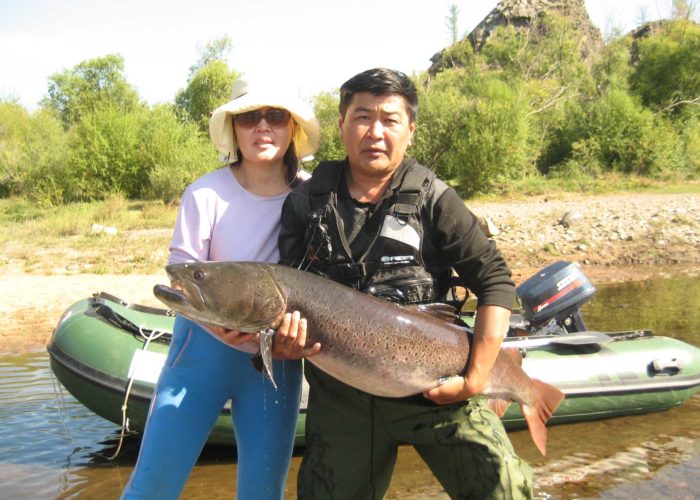
*The River Shishghid is world famous for its enormous Taimen. Taimen, so called King of the Rivers, is one of the largest freshwater fish on earth, can be up to 1.6 m in length, average 0.5- 1.4 m. Taimen are the major sport fish in Mongolia and can be caught on a large imitation mouse fly or prairie dog sized lure; the surface takes can be spectacular! Fishing in Mongolia isn't just all about casting huge flies for these giant trout: dry-fly fishing for Lenok and Grayling is exquisite. Spinning and lure fishing is excellent too. Siberian grayling, Siberian white fish, Lenok, and Taimen can all be found in this the region. The stunning nature in the region.
Location: Far north of Mongolia, on the north-west side of Khuvsgul lake. The distance is about 900kms from Ulaanbaatar-the capital city of Mongolia.
How to get there: The most usual way to get there is 1st, flight Ulaanbaatar-Moron, 1.5hrs, then traveling by 4x4 jeeps about 300kms for 6-7hrs drive by pretty bumpy off-road. Or, available chartered helicopter transportation, if the anglers prefer comfort and can afford paying for this. It’s about 6hrs flight, one way and costs around 2000USD per hour. Also, we remind that the travelers are to pay for the empty return of this helicopter back to Ulaanbaatar. It’s convenient for group. The helicopter takes max.16 passengers.
*The Onon river: The Onon River is a major watershed for Asia. The river begins on the eastern slope of the Hentii Mountains just south of Russian Siberia and within the immense Khan Khentii Strictly Protected Area (National Park), which is totally devoid of people. The river eventually joins the Herlen and Amur Rivers before entering the Pacific Ocean at the Sea of Okhotsk. The Onon is known as an incredible taimen fishery. The river hosts immense taimen well-over forty inches and the entire stream produces phenomenal numbers of beefy monsters measuring between twenty-five and thirty inches. These mid-range taimen are an absolute hoot to catch all day long from a drift boat. They are aggressive on both the strike and retrieve.
Also, the Onon River supports robust populations of taimen, lenok, pike and grayling. Many of these fish are endemic only to the Onon and Amur river system.
Location: North-east of Mongolia, in the Khentii mountain range. The distance is about 500kms from Ulaanbaatar-the capital city of Mongolia.
How to get there: The most usual way to get there is traveling by 4x4 jeeps or vans for about 9-10hrs drive by paved and bumpy off-road. Or, available chartered helicopter transportation, if the anglers prefer comfort and can afford paying for this. Cost is as mentioned above.
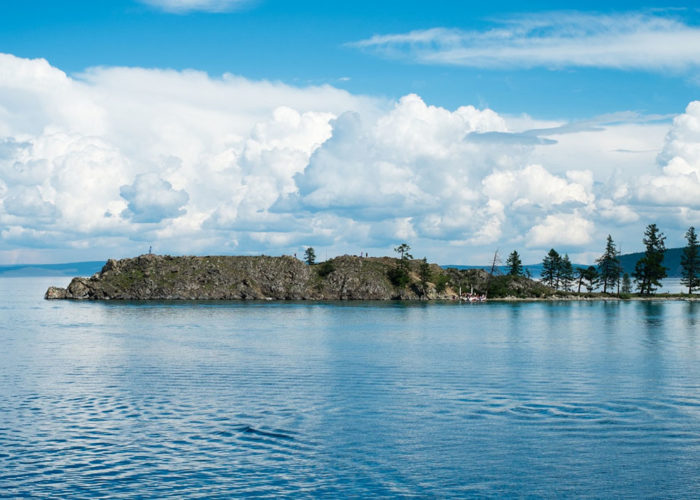
*The Eg River: (Egiin Gol) is the only river that flows out of Lake Hövsgöl, one of the most pristine large water basins of Asia, situated at 1645 meters above sea level. It is the twin lake of Baikal and its waters are equally blue. Two thirds of Lake Baikal's inflow comes from Mongolia through the Selenge and Eg Rivers. One of biggest fresh water rivers of Mongolia with an opportunity to catch Taimen, lenok, pike and some other species.
Location: North of Mongolia, in the Khantai mountain range. The distance is about 550kms from Ulaanbaatar-the capital city of Mongolia.
How to get there: Usually we take there our customers by 4x4 jeeps or vans within 9-10hrs drive by 400kms paved and 150kms bumpy off-road. Or, available chartered helicopter transportation, if the anglers prefer comfort and can afford paying for this. Cost is as mentioned above.
Fishing period.
The best period is May, June, 2nd half of August, September and 1st half of October.
The Fishery
The Onon, Eg, its tributaries and Shishged river sustain exceptionally healthy stocks of four salmonides: Lenok (Brachymystax lenok), Onon Trout (Brachymystax), Amur Grayling (Thymallus arcticus grubei), and Taimen (Hucho hucho taimen).There is also Amur Pike (Esox reichertii) and Perch.
The Taimen is the world's largest Salmonide and the Onon, Eg, Shishgid are one of the last places where healthy populations of this prized (and elusive) fish still exist.
Lenok have all of the characteristics of a trout, growing to a maximum 110 cm. This is an exciting and plentiful sport fish.
The Trout is a relative to the Lenok, and is endemic to the Onon River and its tributaries. A fine sportfish and when landed its appearance looks like a hybrid of Taimen and Lenok. Landed Onon Trout is usually larger than Lenok.
The Amur Grayling found in the Onon river system is one of four Mongolian subspecies. The fish grows to a maximum of 40-50 cm.
The Amur Pike have a quite more restricted distribution as compared to the Northern Pike, and occur only in the Amur River drainage basin.
Our fishing policy
Our main policy, especially for Taimen is “CATCH-AND-RELEASE”. We emphasize the precious quality of this spectacular resource and insist that the actions of our guests and staff reflect this ethic. Our goal is to make certain that healthy populations of fish such as the Taimen do not undergo the fate of their cousin, the Danube Salmon. Better fishing is in the morning and late afternoon fishing, and moving during midday, provided this method is suitable for fishing.
Fishing methods
The fishing goes in a variety of locations from tight spring creeks to the large main river. All fishing is done with fly rod or light-tackle using artificial bait. All Taimen fishing is catch and release only using braless hooks. There are no dams in the Onon and Eg river watershed. As a result, the river and tributaries are susceptible to water flow fluctuations which impact fishing.
Tackle
For taimen, we suggest at least an 8-weight rod with both floating and sinking lines. Grayling and Lenok are most fun using a 4 or 5 weight rod. For Taimen, use mostly large mouse or streamer patterns on a nine or ten-weight rod. A five-weight rod with smaller trout patterns (both wet and dry) produces healthy lennok and grayling. The perch and pike take a variety of poppers and streamers cast from the larger rods using belly boats.
Climate
Please note that you need to be prepared for winter conditions due to the variations in temperature during the September period. In the daytime, sunny and warm weather is likely, however during the early morning hours you are equally likely having subzero temperatures! Even the daytime can bring winter conditions. You need to bring your own four-season sleeping bag with you.
Meals
Our master cook will prepare the meals. Both western and Mongolian cooking. Fresh food will be cooked every day. Vegetables are available.
Living
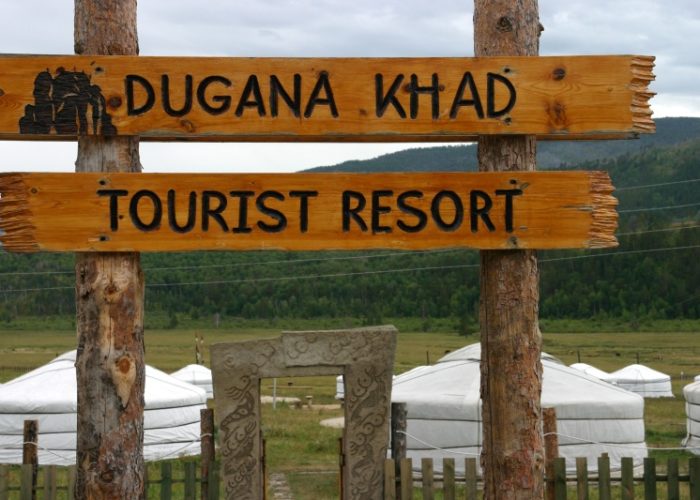
At Onon, Shishgid rivers, you will live in Mongolian gers meals served in a ger restaurant and very simple resting facilities. Maxumum 3 pax in a ger. It’s not permanently heated by the stove in midnight. Some days, according to the itinerary, you will live in tents. 1 pax in a tent.
Ar Mongol Travel Company fishing lodge.
At Eg and Tarvagatai river location, our company has own fishing and hunting lodge in the north of Mongolia. Our lodge is a timber house with 3 rooms for 11 pax capacity fully furnished with such facilities as shower, toilet, sauna, home style kitchen and relax room with open fire stove, all inside the house and heating system with year around running.
Suggested Clothing
- Hiking boots (waterproof)
- Polypropylene long underwear – recommended layer beneath neoprene waders
- Poly/cotton and chamois flannel or fleece shirts
- Fleece or down vest or “down shirt”
- Fishing jacket/windbreaker
- Fishing and camp trousers – jeans, cotton chinos, canvas, corduroy, or wool
- Rain gear, waterproof (Gore-Tex) and to use as extra layer: Note: Fishing jacket or rain jacket with tackle pockets and warming pockets and snap on hood is desirable.
- Wool or poly fingerless gloves
- Shorts for warm weather
- Short-sleeve shirts
- Cotton and wool socks
- Warm sweater
- Knitted stocking cap
- Visored fishing hat
- Warm-up suit for walking between your tent and rest facility
- Warm coat (down-filled) for later Sept./Oct. weeks; for morning and evening runs to and from tents
Miscellaneous
- Camera and plenty of film (film is not available at camps)
- Insect repellent
- Personal medications
- Face cloth, toilet kit, bath towel
- Sunscreen
- A battery-operated razor is probably best; otherwise, blade razor
- Snacks – Some are available at camping but you may want to take some personal favorites such as crackers, candy bars, dried fruit, etc.
- A day pack or gear bag – You need a small waterproof bag to take “stuff” out each day including camera gear, extra tackle, clothing and snacks. Can also double as a piece of carry-on luggage.
- Flashlight
- Liquor of choice
|